Data Residency and Compliance Requirements for Enterprise RAG Systems
Enterprises must control data across the entire RAG pipeline, not just storage.
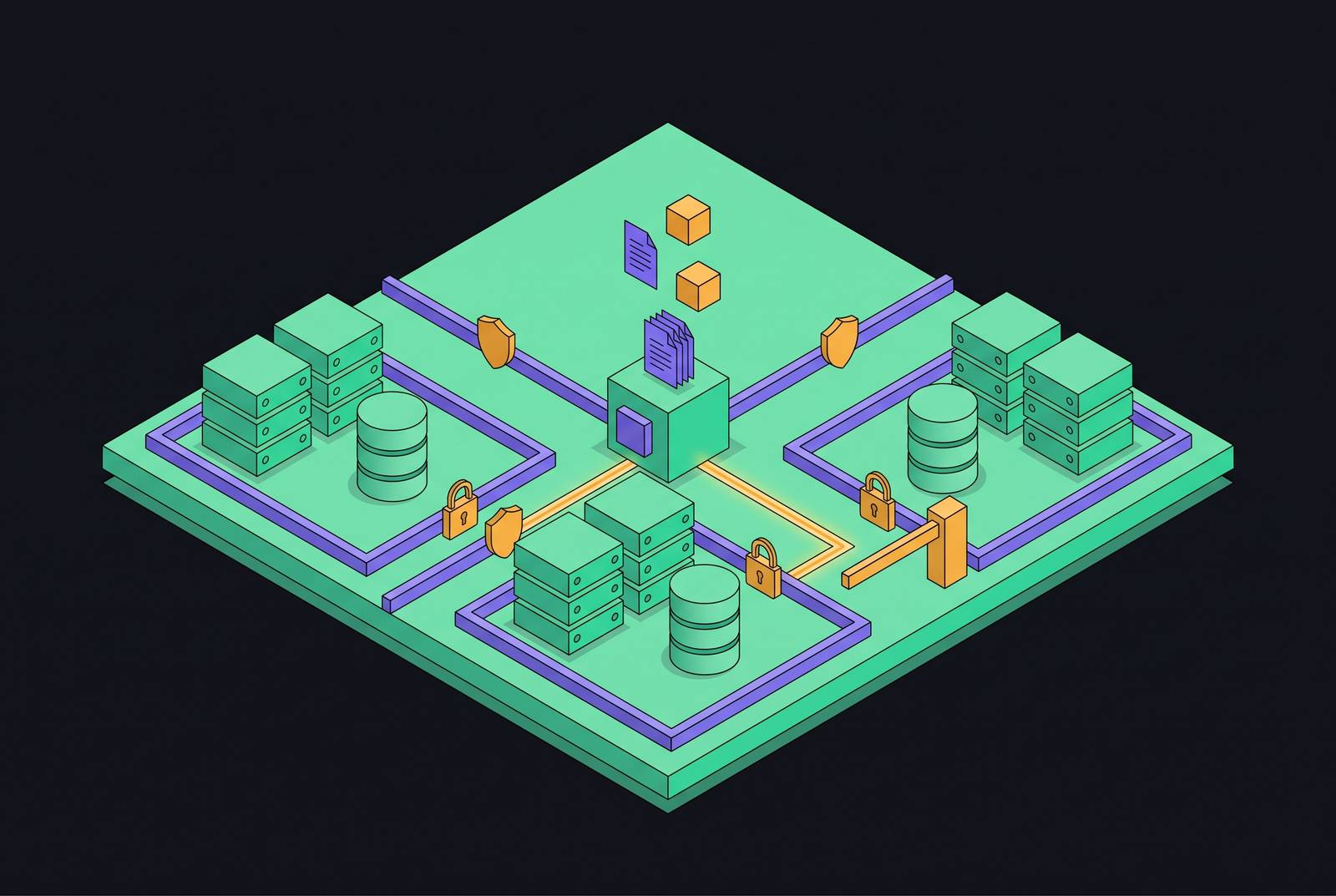
Enterprise RAG data residency and compliance requirements extend across the full pipeline, including the database. For enterprise AI teams, a SOC 2-aligned web retrieval API is not sufficient evidence of geographic compliance because SOC 2 does not establish processing location. Defensible compliance requires documented processing boundaries, disclosed sub-processors, retrieval-layer permissions, and an auditable path through ingestion, inference, and logging.
Why data residency in enterprise RAG systems is a lifecycle problem, not a storage problem
An Indian NBFC could not answer basic regulatory questions about its AI system because its Azure region choice did not establish inference-path residency, and its logs could not reconstruct customer responses. The database location was not the decisive fact. The examination required evidence of what the system produced, which source documents supported it, and where processing occurred. A region setting could not supply that evidence.
This failure exposes three distinctions that shape architecture. Data residency means where data is physically stored or processed, including backups, logs, inference services, and support tooling. Data sovereignty is whose laws govern the data, while data localization is a legal requirement to keep a defined category of data within a border. These concepts overlap, but they are not interchangeable. The operator of a local data center may still be under foreign jurisdiction.
The practical consequence is that residency is a lifecycle property. Each ingestion job, embedding call, retrieval query, and prompt assembly is a distinct processing event, as are inference, observability, and the audit trail. Any uncontrolled hop can create liability for the enterprise. The architectural test therefore covers where regulated data resides, which services process it, who can access it, where backups are held, and what happens under failover. That test begins at ingestion and indexing, then follows retrieval, inference, live web grounding, and observability.
The regulatory frameworks that make pipeline-wide enforcement non-optional by 2026
Under GDPR, a cross-border embedding call is subject to the same transfer rules as any other transfer of personal data. Transfers to a third country require an approved mechanism, including an adequacy decision, Standard Contractual Clauses, or Binding Corporate Rules. An approved storage location cannot substitute for that mechanism. Article 17 also reaches into the index because erasure must remove personal data from both the embedding store and the source document.
The EU AI Act also requires lifecycle governance and traceability for high-risk systems. The AI Omnibus regulation, which entered into force on July 27, 2026, deferred full Annex III high-risk enforcement to December 2, 2027. That deferral does not suspend separate data protection obligations. Article 12 requires automatic logs appropriate to the system’s intended purpose, but does not prescribe a general RAG-specific field list. The minimum fields it names are for remote biometric identification systems. Documented data governance, bias detection, and risk management must also continue after deployment.
Sector rules make these obligations more specific. India’s RBI (Digital Lending) Directions, 2025 replaced the 2022 guidelines and require need-based collection with prior, explicit borrower-level consent records, India-based storage, and offshore repatriation within the prescribed period. India’s DPDP Act 2023 adds consent, purpose limitation, and deletion obligations. Geography alone still leaves a jurisdictional question. The US CLOUD Act can compel American providers to produce data regardless of server location, while SOC 2 evaluates AICPA security and related criteria.
Where residency controls must be applied at the ingestion and embedding stage
The first exposure occurs before the vector store receives anything. Extraction pipelines process PDFs, SharePoint documents, database records, and API responses, so the ETL execution environment belongs inside the compliant boundary. A document can begin in an approved repository and leave the permitted jurisdiction during preparation for indexing. The ingestion job therefore needs the same geographic scrutiny as the database it populates.
Managed embedding APIs introduce a separate transfer. They send document content to external servers for vectorization, even when the resulting embeddings return to an in-region index. Cloud vector services also add infrastructure, and where it is located must be known. For regulated corpora subject to EU residency requirements or UK GDPR transfer restrictions, self-hosted embedding models may be required. That choice belongs in system design.
Oversized chunks make erasure expensive because removing one person’s record can require disproportionate re-embedding and re-indexing. Each chunk should enter the index with a jurisdiction tag, document classification, data category, and authorized roles so that downstream controls have a consistent basis. Retrofitting those fields leaves an inconsistent index during the transition. Backup and replica paths need equivalent controls because copying compliant ingestion outputs across a prohibited boundary creates another exposure.
How the vector store becomes a permission leakage surface without retrieval-layer access controls
A correctly located vector store can still disclose documents that a user has no right to see. Source-system permissions do not automatically transfer to the index. A user barred from a confidential HR document can retrieve semantically similar chunks from it if retrieval ignores the document’s access rules. The AI then becomes a route around existing controls. Geographic compliance does not prevent that disclosure.
The consequences can extend beyond unauthorized access. If those chunks enter a session processed by an inference service in another region, one permission gap also creates a potential transfer event. Retrieval is therefore a compliance boundary in its own right. Candidate chunks need filtering against the querying user’s authorization profile before they enter prompt context, rather than application-layer filtering after retrieval. The jurisdiction, classification, and authorized-role metadata established at ingestion makes that enforcement possible.
Shared indexes require another layer of separation. Departments, business units, or customers that share a store need vector-level tenancy controls, and the choice of logical or physical isolation depends on how sensitive the data is. Erasure requires index-level deletion tooling as well. The organization must show that deleted source data can no longer be retrieved, since deleting it at the source does not ensure that its indexed representation is gone. Finally, managed vector services may store chunks on infrastructure across regions, so hard localization requirements mean that physical locations must be documented or that the infrastructure must be self-hosted within the permitted boundary.
The inference boundary and why an in-region vector store does not guarantee in-region generation
The Indian NBFC’s Azure deployment illustrates the gap between selecting a region and establishing the processing boundary. Microsoft’s deployment types determine where provisioned inference may run. Regional Provisioned keeps processing within the customer-specified Azure geography, while Global Provisioned may route requests to any Azure region. Deployment type is the operative control. Regional, Data Zone, and Global Provisioned therefore cannot be treated as equivalent choices for a localization requirement.
Retrieved chunks can combine personal, health, or financial data from multiple documents into one inference request. Everything upstream can be controlled and still fail here. For managed inference, the provider’s contractual processing boundary and the organization’s technical audit mechanism must establish where computation occurs. This is not a separate confirmation procedure that overrides Azure’s deployment-type selection.
Self-hosted inference inside the compliant boundary removes that inference transfer risk, but requires infrastructure investment and model management. Haystack, built by deepset, supports sovereign deployment models used at organizations including Airbus and the European Commission. These models include cloud, VPC, on-premise, and air-gapped deployments.
For the NBFC, the decisive evidence was the inference path. Even an in-region managed endpoint operated by a US-headquartered provider remains exposed to US law enforcement access under the CLOUD Act.
How can live web search be added without compromising data privacy?
Internal RAG can retrieve only what the organization has already indexed, but it may need external retrieval for recent regulatory changes, live market data, and current events. Each agent tool call creates a new data flow. Its jurisdiction needs its own check, apart from the controls on internal documents. A search or content API in one jurisdiction and downstream processing in another can introduce transfer risk under GDPR.
A SOC 2 Type II certified service can still process data in a region that conflicts with the enterprise’s obligations. A service with documented processing locations and disclosed sub-processors offers a transfer path that can be assessed, while an opaque chain of third-party services does not. Pipeline ownership helps make that path visible, but contracts specifying each sub-processor’s geographic boundary can also establish accountability.
Web content that comes back then goes through the same prompt assembly and inference stages as internal chunks. The controls at those stages must cover external content too. Context engineering helps with compliance here because filtering, ranking, and shaping web results can make it less likely that personal or jurisdiction-mismatched content reaches inference. Retrieval quality and privacy are consequently linked.
Observability and audit logging as a compliance stage that most RAG architectures leave uncontrolled
Most RAG compliance guides stop at inference and treat observability as operational tooling. That distinction hides a further processing event. LangSmith, Langfuse, and similar platforms may capture full prompts and completions, replicating retrieved chunks, assembled contexts, and responses containing regulated data. If that infrastructure is outside the permitted boundary, the telemetry is another transfer. Correct upstream processing does not authorize an uncontrolled logging destination.
The Indian NBFC’s examination exposed the separate problem of inadequate evidence. Its engineering team had incomplete, unstructured logs when asked for the exact responses customers received and the source documents behind them. Debugging records were not an adequate audit trail. The failure was in logging architecture.
For RAG, a practical audit record includes the exact query, retrieved chunk identifiers, source document provenance, assembled prompt context, generated response, timestamp, and user identity. Those fields support reconstruction of an output’s basis as an architectural response to traceability needs under Article 12. The records must be kept for as long as the applicable regulation requires, and they must stay within the compliant boundary. Self-hosted observability or services with documented in-region residency can address location, while cloud-hosted services also require scrutiny of extraterritorial access. Log permissions must match the sensitivity of the recorded data rather than grant unrestricted access to engineering teams.
What makes residency compliance architecturally defensible across the full pipeline
Defensible compliance depends on a visible chain of custody. Residency tags and classification levels need to be the same across documents, chunks, embeddings, and log entries. Downstream enforcement depends on that shared foundation. It connects ingestion decisions to retrieval permissions, geographic restrictions, and deletion workflows without requiring each stage to infer the data’s status again.
Deletion must follow the same complete route. An Article 17 workflow reaches the source system, vector index, embedding cache, audit records subject to retention minimums, and backups or replicas. Source-only deletion leaves the task unfinished. In parallel, a structured audit trail needs to answer what the system output, which source data supported it, and where processing occurred. Managed inference boundaries and logging locations must be supported by contractual and technical evidence rather than assumptions inherited from cloud region settings.
These design decisions work together under examination. Metadata defines what controls apply, retrieval enforces authorization, documented service boundaries constrain processing, and logs preserve evidence of the result. No single component can establish the whole case. The defensibility test is whether the organization can demonstrate that regulated data stayed within its permitted boundary throughout processing, including failover, external retrieval, and telemetry.