Retrieval Infrastructure Due Diligence Checklist for Engineering Teams Evaluating Web Grounding Vendors
Engineers evaluating web grounding vendors should audit full pipeline ownership and content quality.
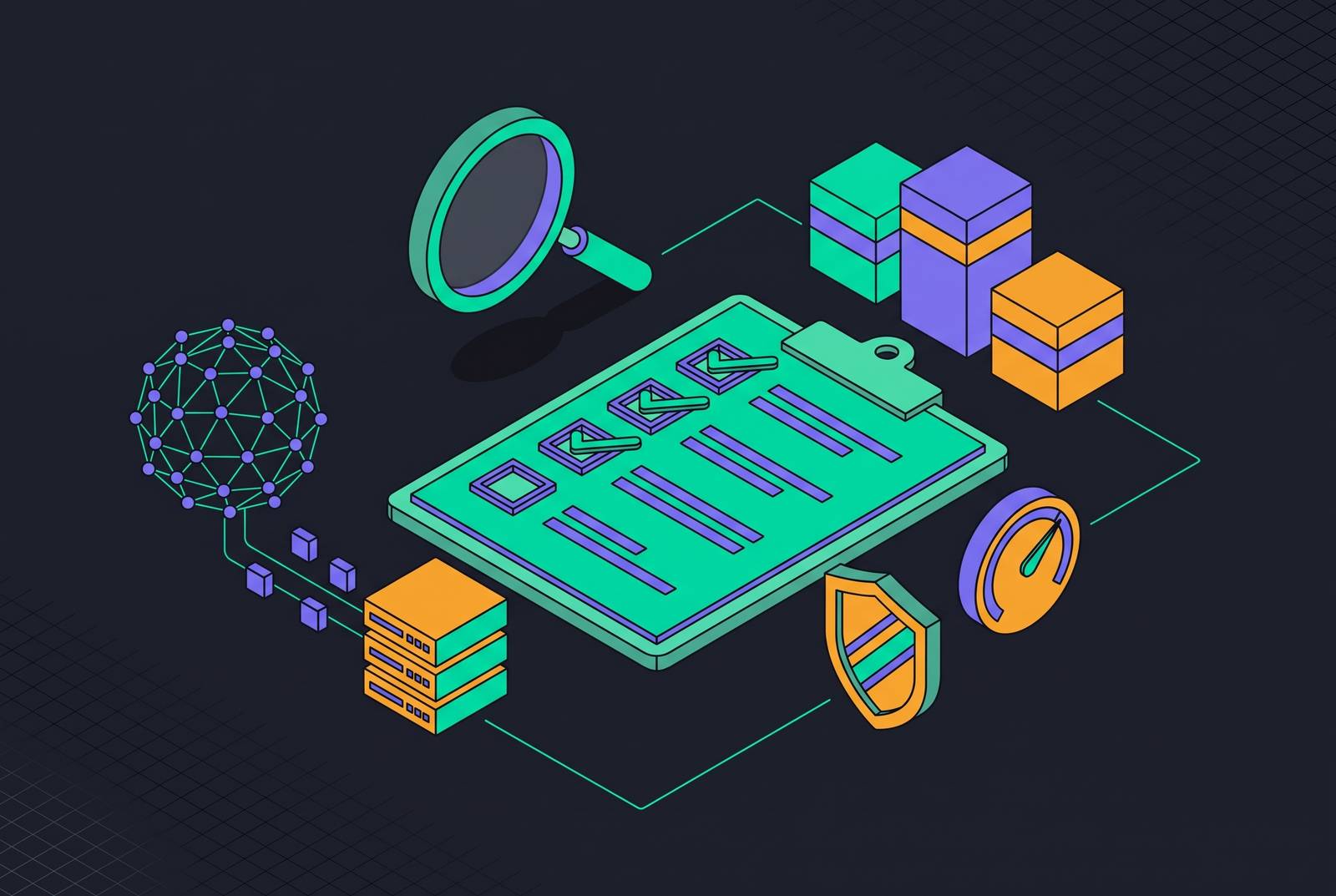
Full end-to-end pipeline ownership for web retrieval means directly controlling crawling, indexing, chunking, ranking, and delivery. Engineering teams evaluating web grounding vendors should treat that ownership as the starting point, then test content quality, freshness, latency, integration, security, and cost. Production suitability depends on the complete path from source content to usable evidence.
Why web grounding is an infrastructure problem, not a feature decision
Retrieval sits inside the inference loop, where missing or stale evidence can become a reasoning error. A human searcher can inspect an imperfect result and repair the search, but an agent may build its next step on that result. Strong models cannot compensate reliably for noisy or truncated context. Grounding supplies external context at inference time, while RAG is its most common implementation. For applications that need current, verifiable web information, a model’s fixed training cutoff makes live retrieval a structural requirement.
Microsoft’s engineering account of Web IQ identifies grounding as the dominant bottleneck once AI systems deploy at scale. The constraints include what information reaches the model, its freshness, the available context, and delivery speed. Those constraints belong in an infrastructure review. A vendor demo can show fast search and snippets that look right without showing what the pipeline depends on, how it behaves under load, or what security risks it has.
How current retrieval infrastructure was built for humans and why that mismatch matters for agents
Search engines return URLs and snippets, while CDNs cache URL-addressed objects. Neither abstraction identifies the particular passage an agent needs for its next reasoning step. The Semantics Delivery Network paper, published at HotNets’26, describes agents consuming coherent chunks selected for downstream utility and retrieving statefully across turns. The unit of consumption is the passage. Yet independent agents repeatedly fetch, clean, chunk, and embed the same pages, pushing redundant work onto origins.
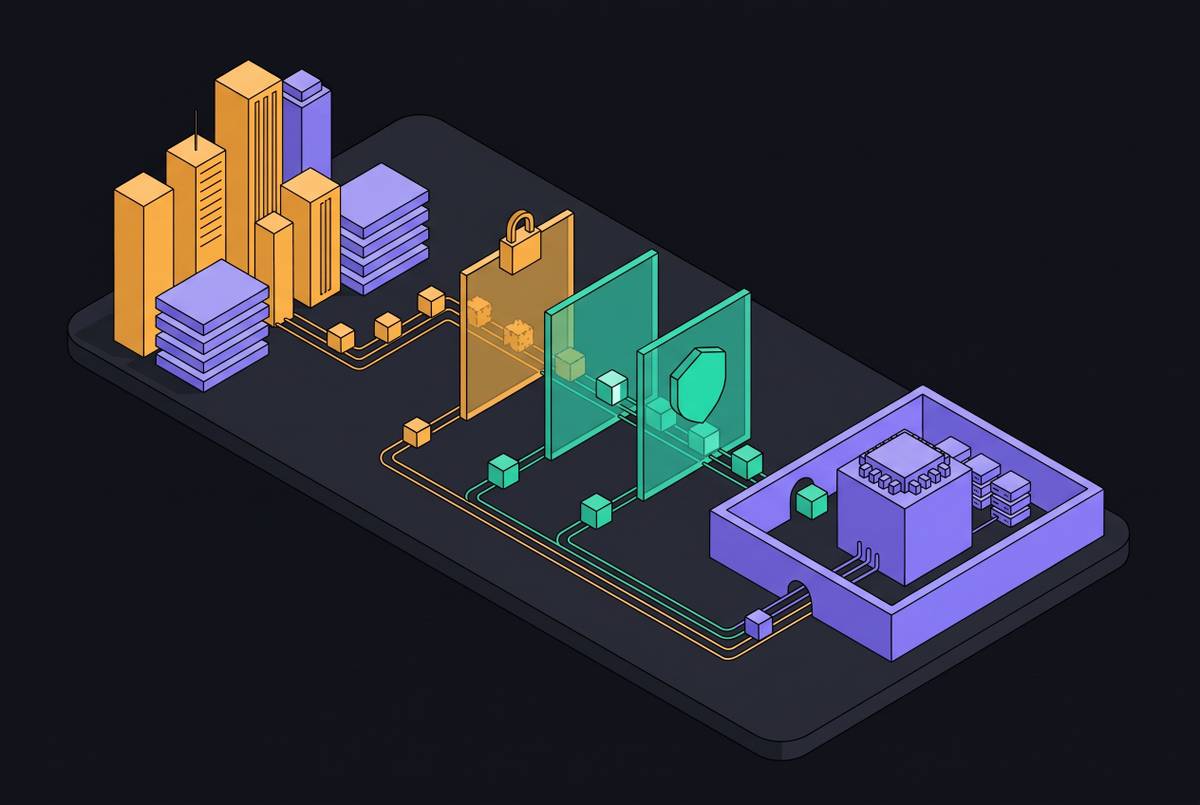
SemDN reports that page-first retrieval processes two to three orders of magnitude more content than agents consume. The Agentic Web Interface paper from McGill/Mila diagnoses a related mismatch in agents navigating massive DOM trees, screenshots, or APIs designed around human interfaces. Adaptation creates a chain of dependencies. A legacy retrieval path can pass through a search results API, scraper, HTML parser, chunker, embedder, vector store, and retriever before reaching the LLM. LLM-native retrieval instead aims to return relevance-ranked, machine-ready content in one call, so the application no longer has to do that assembly work.
Full end-to-end pipeline ownership for web retrieval starts with who controls crawling, indexing, and serving
Pipeline ownership determines which guarantees a vendor can make directly and which depend on another provider. A wrapper inherits its upstream index’s refresh cadence, coverage gaps, ranking behavior, and rate limits. It cannot independently repair those upstream constraints. Owning crawling, indexing, chunking, ranking, and delivery gives a vendor control over the stages that determine passage quality and availability. That control also permits optimization for AI-specific signals independently of generic search relevance.
SemDN places acquisition and normalization at the shared infrastructure layer, connecting them to semantic caching, chunk-level indexing, and stale-evidence estimation. Teams should ask whether the vendor crawls and indexes its own corpus and can explain how crawl frequency, coverage policy, and deduplication work. They should find where changes in upstream pricing, access, or ranking would change the results they get. The SLA should then be examined for whether it covers query-to-content delivery or only the vendor’s API surface.
Content processing depth: what the vendor delivers versus what the model can actually use
Ownership establishes control over the pipe, but the response reveals what the application still has to build. Titles, URLs, and snippets leave scraping, HTML parsing, boilerplate removal, logical chunking, and metadata attachment to the engineering team. A successful response is not necessarily usable context. A processed response instead provides clean passages or Markdown, bounded by meaning, with a title, URL, source name, and timestamp attached to each surviving chunk. That provenance lets the model cite evidence without the application reconstructing its origin.
SemDN finds that delivering chunks gives better answers per context token than page-first retrieval does. The gain comes from selecting useful evidence for the context window. Teams should inspect whether the vendor removes duplicate snippets and near-identical URLs, ranks passages, and supports a configurable context limit. They should also ask whether they can change extraction depth and how the vendor handles JavaScript-rendered pages, PDFs, and documents that need more than a simple HTTP fetch. Otherwise, noisy or poorly bounded responses can lead to context stuffing, with more input but weaker reasoning.
Retrieval relevance and freshness: how well the index serves AI reasoning rather than human search
Clean formatting does not establish that a passage answers the agent’s question. Human search signals such as backlinks, dwell time, and keyword density serve a different target from passage utility for a specific sub-query. Similarity alone is not sufficient either. Microsoft describes lexical and click-prior approaches as underserving useful content with low engagement, and presents semantic-first retrieval as a way to surface it. Teams should ask whether ranking is lexical, semantic, or hybrid, how those signals are calibrated, and how retrieval performs on their own domains and question types.
Freshness adds a separate constraint because the right passage can still describe an outdated state. Cached technical references may work well when they rarely change, while financial data, news, or regulatory filings that change hourly need to be handled differently. One refresh policy cannot serve both well. Evaluation should establish crawl cadence by content type and the resulting freshness at query time. Teams should also examine publication-date filters, recency windows, and cache-age overrides that trigger live retrieval, so the vendor does not silently choose the freshness-versus-latency trade-off for every request.
Latency architecture: why the end-to-end round trip is what matters, not the API response time
The useful latency measure begins with the query and ends when LLM-ready context is available. A fast response containing links stops the clock before the application fetches pages, renders JavaScript where necessary, parses HTML, and extracts text. Those steps remain on the critical path. Microsoft reports sub-165ms P95 latency for Web IQ and says this performance comes from systems design that takes quality and token efficiency into account together. That claim illustrates the architectural objective, but it does not replace testing the complete retrieval path for a particular workload.
Agentic tasks can run several searches, so delays can add up across reasoning steps. Average latency conceals that operational risk. Teams should measure P95 and P99 under sustained throughput and distinguish cached responses from live extraction at the required content depth. They should ask whether the quoted latency includes all the processing needed before the content can be fed to the model. Rate-limit testing must also establish whether overload causes failure, queuing, or degradation, because adding application compute cannot remove a search API throughput constraint.
Agent integration depth: MCP support, tool-calling compatibility, and what "integration" actually requires
The Model Context Protocol, introduced in 2024, standardizes integration through JSON-RPC message exchange. A hosted MCP server lets compatible clients discover and call tools, but the provider decides which tools and parameters they can use. Endpoint availability is only the starting point. Microsoft describes Web IQ as MCP-native and model-agnostic, saying it must be designed to work across models and agent frameworks. Teams still need to establish whether an integration exposes the controls their agents require.
That review should compare direct API and MCP access for result count, content depth, domain filters, freshness, caching, and retry behavior. Missing controls can move configuration work back into the application. Tool descriptions also consume context tokens, so excessive tools and uncapped results can crowd out useful evidence. Teams should ask about authentication, stable versioned schemas, breaking-change management, and demonstrations with their chosen frameworks, including LangChain, LlamaIndex, or CrewAI. For stateful workflows, they should also examine support for change tracking, entity discovery, and deep research rather than assuming single-query search covers multi-turn retrieval.
Security posture: prompt injection from retrieved content and the attack surface vendors rarely disclose
Web retrieval introduces an instruction channel that the user did not authorize. An attacker can plant directions in a webpage or document that an agent later reads, without interacting with the model directly. If content processing lets suspicious instruction patterns through without filtering or flagging them, the vendor passes that risk into the application. Security testing must check the retrieval path itself for returned passages that could cause harm.
The defense needs controls in both the infrastructure and the application. Privilege minimization limits what a compromised agent can do, while human approval gates constrain high-consequence actions and output validation checks proposed actions against user intent. Filtering alone is not a complete defense. Teams should ask whether the integration lets them use fine-grained permissions and whether response structures let them validate the results. They should also establish where content is processed and temporarily stored, what data residency controls exist, whether audit logs can reconstruct returned content, and how pipeline vulnerabilities are disclosed and addressed.
Cost structure: what drives retrieval cost at production scale and how to evaluate it honestly
Per-query pricing excludes much of the expense created by a retrieval architecture. A link-only response requires follow-up extraction, while noisy content adds model tokens and engineering work to make the result usable. The unit of comparison should be the task. Cost per correct answer accounts for both the total cost of execution and measured answer accuracy, so a cheap call that fails to answer correctly does not look like good value. For an agent that searches repeatedly, the model must include every sub-query, extraction, and retry needed to produce that answer.
Throughput restrictions add another cost that a pricing page may not show. Queuing, retries, and infrastructure workarounds create operational overhead without removing the upstream limit. Rate limits belong in the financial evaluation. Teams should work out what typical full tasks would cost at their monthly volume, including returned-context tokens and pipeline maintenance, then check how pricing and limits change by tier. They should also ask whether freshness, extraction depth, and domain filtering are included or separately charged, because required capabilities belong in the baseline comparison.
Running the evaluation: how to test vendors under conditions that reflect production workloads
Vendor benchmarks cannot be reliably compared when they use different models, prompts, and question sets. Teams should run the same agent tasks under consistent conditions, using factual, technical, current-event, and research queries representative of production. The workload is the common measuring instrument. Tests should check whether retrieved evidence supports the answer, whether citations keep its provenance intact, and how the system behaves near rate limits.
The first phase should follow the architecture from crawling through to the content that arrives, showing where it depends on third parties and what guarantees cover each handoff. The second should check raw responses for extraction depth, chunk boundaries, metadata, and deduplication before the model generates an answer. This separates retrieval defects from generation defects. The third should measure query-to-context latency at the throughput the system will face, including how P95 and P99 behave at and beyond published rate limits.
The fourth phase should examine instruction filtering, data residency, audit logging, permission scoping, and vulnerability disclosure rather than accepting a general assurance about best practices. The fifth should work out the cost of whole tasks using actual pricing, the volume expected, the extraction needed, and the tokens used. Compare the resulting cost per correct answer. Unanswered architecture questions are evaluation findings to resolve before deployment. The final decision should rest on demonstrated control of the data path and measured performance across the whole workload.
Sources
- Semantics Delivery Network: Rethinking Web Retrieval Infrastructure for LLM Agents
- Grounding at scale: Engineering the retrieval system for the agentic web - Command Line
- Infrastructure for the Agentic Web: Gap Analysis and Architecture from the Agentverse Platform
- Parallax: Why AI Agents That Think Must Never Act